Bitcoin (BTC)
Live exchange rate, history and the best way to convert Bitcoin.
What is Bitcoin and how is it used?
Bitcoin isn't managed by a bank or a government. It runs on a worldwide public network, and that idea first appeared in Satoshi Nakamoto's 2008 whitepaper before going live in January 2009. No single person or company controls it. That means no one can freeze your coins, and there’s no printing more out of thin air.
So what do people do with it? Some just hold on for the long term, using it as an investment, not really as day-to-day money. Others use bitcoin for payments across borders. Take a freelancer in Lagos, for instance, paid by a client in Berlin: they may use bitcoin to skip slow, costly bank wires. There's also a group that finds it useful because you can settle payments on weekends and holidays, as easily as on a Monday morning.
The price you see at the top, right now it’s 76,884.00 USD, shows the current rate in your local currency. If you want a straightforward intro, our article what is Bitcoin breaks down the basics in clear steps.
BTC to USD history
History available since October 20, 2025.
BTC against other currencies
| Currency | 1 BTC = | Inverse |
|---|---|---|
BTC → USDUS Dollar |
76,884.00 USD | 0.0000130066 BTC |
BTC → EUREuro |
68,814.01 EUR | 0.0000145319 BTC |
BTC → GBPBritish Pound |
57,385.36 GBP | 0.0000174260 BTC |
BTC → CHFSwiss Franc |
63,286.12 CHF | 0.0000158013 BTC |
BTC → JPYJapanese Yen |
12,093,854.88 JPY | 0.0000000827 BTC |
BTC → CADCanadian Dollar |
107,415.90 CAD | 0.0000093096 BTC |
BTC → AUDAustralian Dollar |
109,424.16 AUD | 0.0000091387 BTC |
BTC → CNYChinese Yuan |
511,687.78 CNY | 0.0000019543 BTC |
BTC → SEKSwedish Krona |
755,977.05 SEK | 0.0000013228 BTC |
BTC → NOKNorwegian Krone |
709,006.60 NOK | 0.0000014104 BTC |
BTC → PLNPolish Zloty |
302,578.76 PLN | 0.0000033049 BTC |
BTC → TRYTurkish Lira |
3,840,162.59 TRY | 0.0000002604 BTC |
BTC → INRIndian Rupee |
7,300,527.62 INR | 0.0000001370 BTC |
BTC → ETHEthereum |
34.5143 ETH | 0.028974 BTC |
BTC → USDTTether |
76,949.56 USDT | 0.0000129955 BTC |
BTC → XRPXRP |
62,003.23 XRP | 0.0000161282 BTC |
BTC → SOLSolana |
818.0019 SOL | 0.00122249 BTC |
BTC → XAUGold |
19.4417 XAU | 0.051436 BTC |
BTC → XAGSilver |
1,535.56 XAG | 0.00065123 BTC |
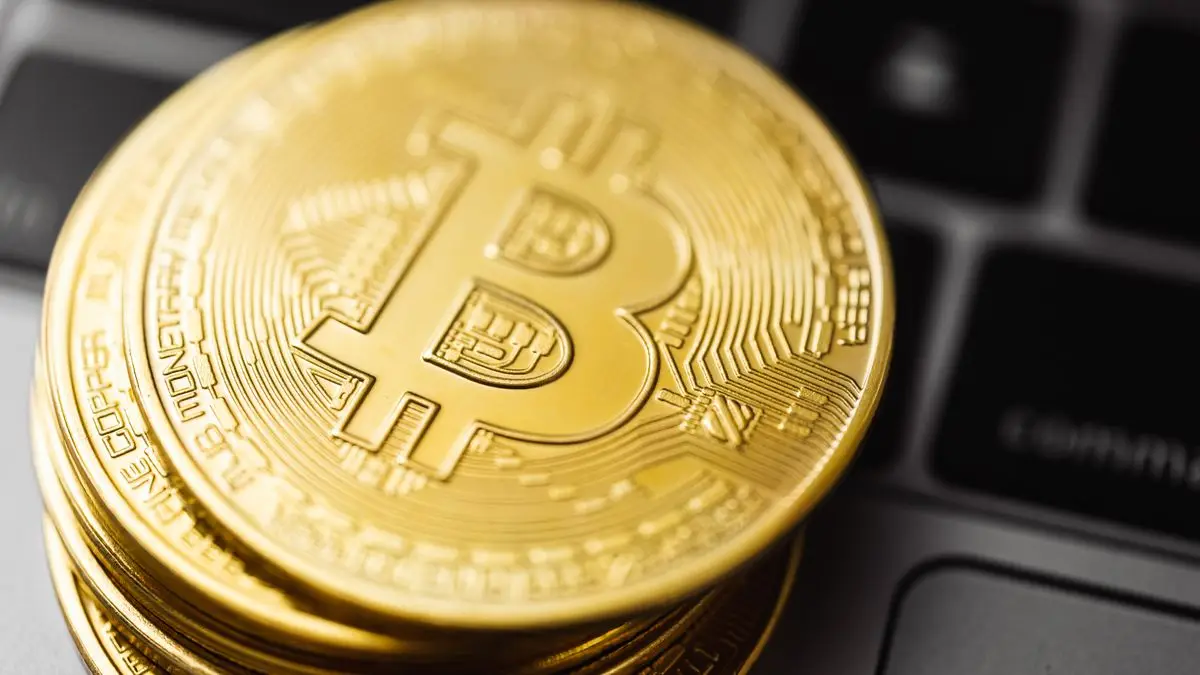
How Bitcoin operates and why its supply is limited
Each payment runs through the blockchain, which is a public record many computers hold identical copies of. About every ten minutes, another block of transactions joins the chain. Miners race to confirm it by solving tough calculations, that approach is called proof of work, and only the winner gets new bitcoin along with the block’s transaction fees. Changing the blockchain’s record would take more computing power than the rest of the network combined, which is the reason the system doesn’t need a central owner you have to trust.
There’s a big difference from traditional currency: the total bitcoin supply won’t exceed 21 million coins, ever. New coins are released at a steady rhythm, but every four years or so, that pace is cut in half. This event is called the Bitcoin halving. No central bank can step in and mint more.
Bitcoin also isn’t made to run programs like Ethereum was. Its design is purposefully simple: transfer value from one address to another, and that’s it. You don’t need to have a whole coin. One bitcoin divides into 100 million satoshis, allowing you to buy the amount you want, however small.
What influences the bitcoin price
You won't find interest payments or company earnings with bitcoin; its price is set by supply meeting demand, and that often comes down to sentiment. In the last year, prices swung -30.12%, from a low at 58,566.09 USD to a high of 110,499.52 USD. In the past 30 days, it shifted -8.08%, while the five-year movement is -29.24%. Look at those together, and it’s clear timing your buy can matter as much as choosing the asset.
There are a few things that really sway the price. Regulatory news or a decision by a large country can send it sharply up or down within hours. Big investors coming in, changes in interest rates, or technical issues at an exchange, each can all have quick impact. The halving often attracts plenty of talk, though traders usually focus on it months ahead of time.
Bitcoin trades at all hours, including weekends. A major jump or dip on a Sunday night happens, with nothing unusual about it. We don’t try to predict where prices will go. What we do here is show you how it has moved so you can decide if that kind of change is a fit for you.
Steps to buying bitcoin and what it will cost
For most people, the process is straightforward: sign up at an exchange, complete identity checks, fund your account by bank transfer or card, then place your order. Our how to buy Bitcoin guide covers each part in detail. Where things often trip people up, though, is the total cost, headline fees don’t always tell the real story.
There are usually four elements. First, the spread: that's the gap between what you can buy for and what you can sell for, often hidden in the quote. The platform usually takes a trading fee as a percentage of your order. Deposit charges vary by method; cards nearly always cost more than bank transfers. After your purchase, withdrawing coins involves another fee, plus the blockchain network’s own charge if you move bitcoin to your personal wallet. Simple interfaces often carry higher costs than advanced trading screens, even with the same exchange.
Exchanges compared often include Kraken, Coinbase, Bitvavo, and Bitpanda. Bitvavo and Bitpanda are both based in Europe, which can simplify euro deposits through SEPA. You can compare two providers directly at Kraken vs Coinbase. The table above lists platforms ranked by your net return after every fee; details on our calculation process are explained on the How we compare page.
Keeping your bitcoin secure
When your bitcoin sits on an exchange, you don’t actually hold the keys, the exchange does. It’s convenient: you can act quickly if you want to sell, and forgotten passwords can be reset. But your coins depend on that company staying both solvent and safe, and not every exchange avoids trouble.
Holding bitcoin in your own wallet means you’re in control of the keys, and no one else can access your coins or lock you out. But then nobody can recover your funds if something goes wrong on your end, either. The seed phrase, usually a string of 12 or 24 words, is your only backup. If anyone gets access to it, they can take your coins. So write it down by hand, store offline, and don’t upload or share it online. Using a hardware wallet puts your keys on a device not linked to your computer, which is a common choice for significant amounts.
Many people keep a modest balance on the exchange for trading and the rest in a personal wallet. For your first withdrawal, send a very small amount to the address first, check it character by character, and make sure you're on the right network. If you make even a small mistake, the funds can't be recovered.
Risks and tax points to consider
Bitcoin can sink in price fast, and there’s no way to know if it will rebound. Don't invest more than you can leave untouched if prices go south for a while. With bitcoin, every transaction is final, banks can’t reverse a payment made in error or to a scam. For common fraud tactics and ways to protect yourself, see our article on crypto scam warning signs.
Tax laws aren’t the same everywhere, and I can’t offer specific advice. Often, holding bitcoin isn’t taxable, but converting it to another currency, swapping for another coin, or buying goods with it can be. Usually, tax authorities want you to record the value in your local currency for every transaction.
That’s why it helps to make good records from the start: date, amount, buy or sell price, and fees. Export your activity from every site you use. If you want to see which actions might be taxable, read our crypto taxable events overview. A local adviser can clarify exactly what rules affect you.
Frequently asked questions
What is the Bitcoin price today?
The current bitcoin price is 76,884.00 USD, shown here in your local currency. This value updates throughout the day, but since bitcoin is traded on multiple exchanges around the clock, other sites may show slightly different numbers. Remember that the actual purchase price you get will include the exchange’s spread and service fees.
Where is the cheapest place to buy bitcoin?
Which provider is cheapest changes with your payment amount, chosen method and even fee tier at the exchange. To see your options, check the table above, it lists what you’ll receive after all fees and spreads. You’ll usually pay less by bank transfer compared to card payments.
Can I buy less than one whole bitcoin?
You can, almost everyone does. Each bitcoin can be divided into 100 million units, called satoshis, so smaller purchases are fully possible. Most platforms have a minimum order size, though the exact amount depends on which exchange you use.
How many bitcoin will ever exist?
Bitcoin’s code sets its upper limit at 21 million coins. The release of new bitcoin slows by half about every four years, so miners won’t finish producing the total supply until far into the future. Some coins are permanently lost, meaning fewer are really available than that maximum suggests.
Is it safe to keep bitcoin on an exchange?
For modest amounts you plan to trade soon, using a regulated exchange and enabling two-factor authentication keeps risk low. But for bigger holdings kept long term, most people prefer moving coins to a personal wallet. That way, you avoid risks tied to exchange failures, but you do take on full responsibility for your wallet’s backup and security, there’s no recovery service if you lose your seed phrase.
Do I have to pay tax when I buy bitcoin?
In many places, just buying bitcoin with regular currency is not taxed on its own. Future events, selling, swapping, or spending it, might be. Rules depend on your location, so talk with your local tax authority or a professional adviser. Until you know the details, keep records of all your transactions.